
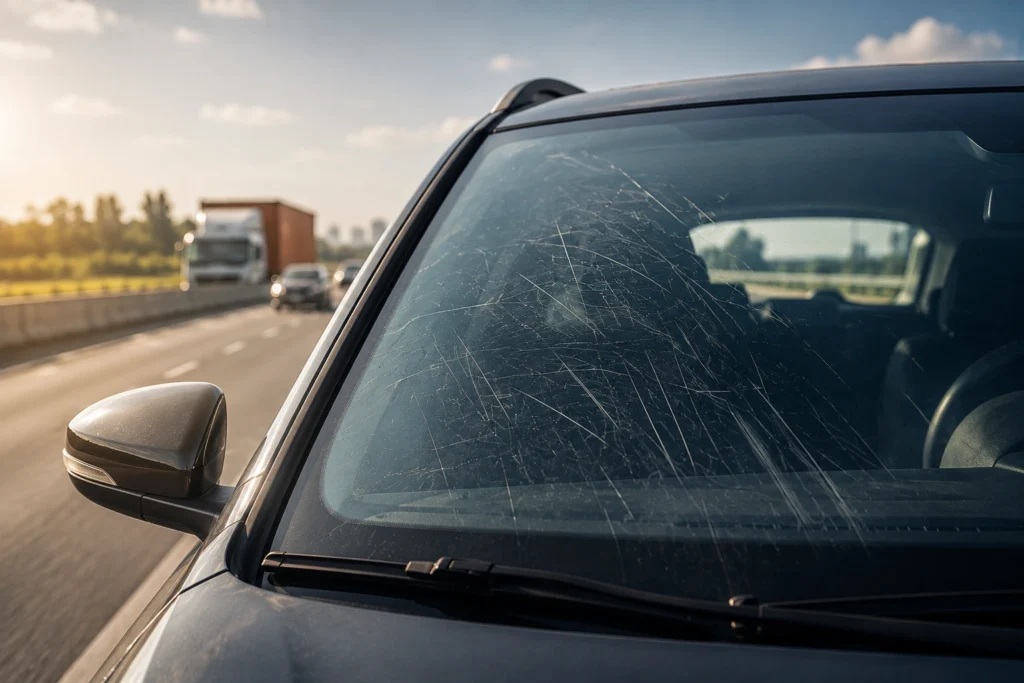
Highway Driving Is Tougher on Your Windshield Than City Driving
Higher speeds, faster-moving debris, and longer driving hours all contribute to increased wear on your windshield. A tiny pebble that might barely touch your glass at 30 km/h can hit with enough force to create a noticeable chip when vehicles are travelling at 80–120 km/h. Over time, these small impacts add up and often lead to costly repairs or complete windshield replacement.
Why Frequent Highway Commuters Spend More on Auto Glass
Highways are constantly filled with trucks carrying gravel, sand, construction materials, and other loose cargo. Even when these vehicles follow safety regulations, tiny stones find their way onto the road. As cars pass over them, these stones become airborne and strike nearby vehicles.
A single impact may leave only a small chip — but that chip can quickly spread into a crack if left untreated.
When you're driving at highway speeds, even a tiny stone can strike your windshield with surprising force. The faster your vehicle moves, the greater the impact energy transmitted to the glass.
If you drive 20 km each day, your windshield is exposed to road hazards for a limited time. But if your daily commute is 80–150 km, you're spending far more time in environments where road debris, changing weather, and construction zones are common. The longer you're on the road, the greater your chances of experiencing windshield damage.
Many commuters leave home early in the morning and return during the hottest part of the day. These temperature differences cause windshield glass to expand and contract. If there's already a small chip, thermal changes can make it spread into a larger crack much faster.
Road widening projects, flyover construction, and highway repairs create perfect conditions for stone chips. Loose gravel, dust, and heavy machinery increase the likelihood of flying debris. Even careful drivers cannot avoid every piece of road material kicked up by surrounding traffic.
Small Chips Often Become Big Expenses
Many drivers ignore tiny chips because they don't immediately affect visibility. But modern windshields are made from laminated safety glass — once the outer layer is damaged, everyday vibrations, potholes, highway speeds, and weather changes can cause the crack to spread. What could have been a quick repair may eventually require a complete car windshield replacement.
Modern Windshields Are More Advanced — and More Expensive to Replace
Today's vehicles often include technology built directly into the windshield. When replacing these windshields, technicians may also need to recalibrate these systems — adding to the overall cost of ownership for highway commuters.
Tips to Reduce Auto Glass Ownership Costs
While you can't eliminate every risk, you can significantly reduce the chances of expensive repairs:
Maintain Safe Following Distance
Avoid driving too closely behind trucks carrying gravel or construction materials. The extra distance gives flying stones more time to lose momentum before reaching your vehicle.
Repair Chips Immediately
A repair performed early is almost always less expensive than replacing the entire windshield. Don't wait until the crack spreads across your field of vision.
Avoid Sudden Temperature Changes
Allow the cabin temperature to adjust gradually rather than blasting cold air onto a hot windshield. The same applies when using the defroster on cold mornings.
Replace Worn Wiper Blades
Damaged or hardened wiper blades can scratch the windshield over time, weakening the glass and reducing visibility — especially on long highway drives in rain.
Choose Professional Installation
If replacement becomes necessary, always choose experienced technicians who use quality glass and proper methods. Improper installation can cause water leakage, wind noise, and incorrect ADAS camera alignment.
Does Insurance Cover Windshield Replacement?
Many comprehensive motor insurance policies provide coverage for auto glass damage. Depending on your insurer and policy terms, you may be eligible for:
When Should You Replace Instead of Repair?
- The crack is directly in the driver's line of sight
- The crack is long or continues spreading
- Damage reaches the windshield edge
- Multiple chips are present across the glass
- ADAS sensors or cameras are affected
- The structural integrity of the windshield is compromised
Why Choose Star Glass House in Ahmedabad?
If your daily commute regularly takes you on highways, choosing the right auto glass specialist can save both time and money. Here's what customers benefit from:
High-quality OEM auto glass for all vehicle models
Skilled installation technicians
Fast turnaround times
Full insurance claim assistance
ADAS-ready installation and calibration support
Reliable service across all major vehicle brands
Final Thoughts
Highway commuting saves time, but it also exposes your vehicle to more road hazards than everyday city driving. From loose gravel and construction debris to high-speed impacts and temperature fluctuations, your windshield experiences constant stress.
Ignoring minor chips can turn a small repair into an expensive replacement. By acting early, driving defensively, and relying on experienced professionals, you can keep auto glass ownership costs under control while staying safe on every journey.