
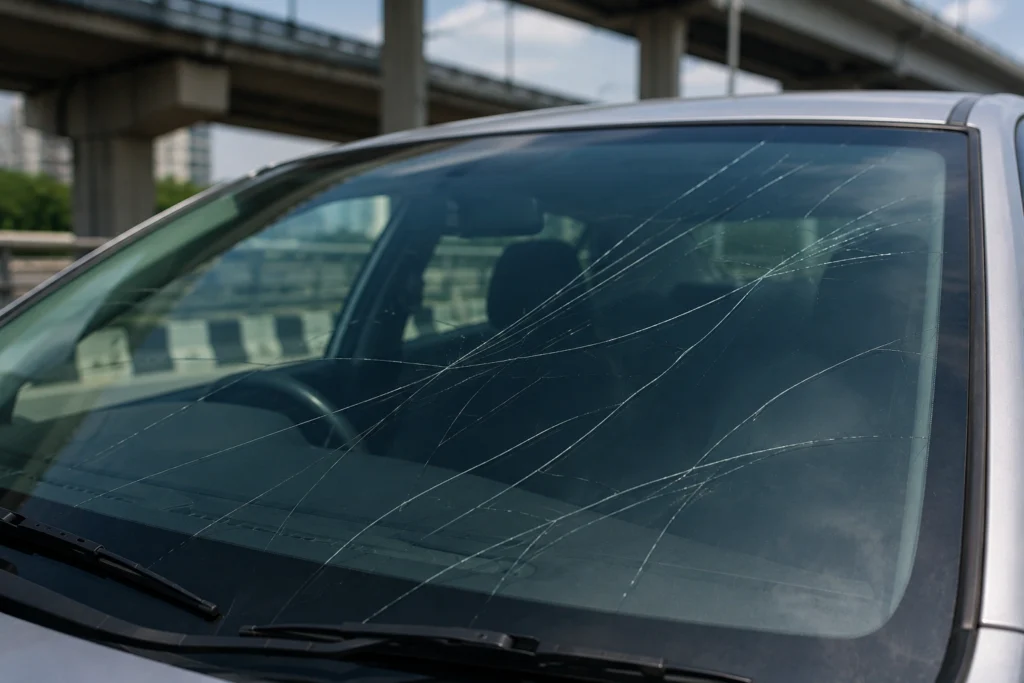
Understanding why this happens can help you protect your vehicle, avoid expensive repairs, and know when it's time to consider a professional windshield replacement.
Why Flyovers Are More Dangerous for Your Windshield
Flyovers are built to improve traffic flow, but they also expose vehicles to conditions that significantly increase the chances of stone impact and flying debris:
Flyovers frequently undergo expansion joint repairs, resurfacing, and maintenance. During these activities, loose gravel, crushed concrete, and small metal particles remain on the road. As vehicles drive over them, tyres launch these objects at high speed — even a pebble no bigger than a marble can leave a chip in your windshield.
The danger increases significantly when driving behind trucks, buses, or construction vehicles carrying sand, gravel, or cement.
Most elevated roads have higher speed limits than city streets. A stone travelling at high speed carries significantly more force than one bouncing around in slow-moving traffic. The faster both vehicles are moving, the greater the impact energy — and the more likely a small piece of debris is to create windshield damage.
Large commercial trucks and dumpers regularly travel across flyovers. These vehicles often:
- Carry construction materials in uncovered loads
- Have worn-out tyres that throw stones sideways
- Drop small debris that becomes a hazard for following vehicles
Unlike roads surrounded by buildings, flyovers are exposed to open air. Strong side winds can lift dust, small stones, sand, dry leaves, and construction particles — airborne objects that may strike your windshield unexpectedly, especially during windy weather or when driving past construction sites alongside the flyover.
Every flyover contains expansion joints that allow the bridge to expand and contract with temperature changes. As heavy vehicles cross these joints, vibrations loosen dirt and gravel trapped nearby — meaning vehicles close behind often experience a sudden spray of flying particles immediately afterward.
Many flyovers remain surrounded by active construction. Nearby activities such as concrete cutting, drilling, demolition, and asphalt resurfacing can release debris that eventually reaches moving traffic — which is why drivers frequently notice new windshield damage after passing construction zones.
Small Chips Can Become Big Problems
One of the biggest mistakes drivers make is ignoring a tiny stone chip. What appears harmless can spread quickly due to:
A repair that could have taken minutes may eventually require a complete car windshield replacement.
How to Reduce the Risk of Windshield Damage
While you can't eliminate the risk entirely, a few simple habits make a significant difference:
Maintain a Safe Following Distance
Stay well behind trucks, dumpers, and vehicles carrying loose materials. This gives flying stones more time to lose speed before reaching your windshield.
Slow Down Near Construction Areas
Lower speeds reduce the impact force of debris and give you more time to react if something appears on the road ahead.
Avoid Driving Directly Behind Heavy Vehicles
If it's safe to do so, change lanes rather than following construction vehicles for long distances on the flyover.
Repair Chips Immediately
A small repair today is much less expensive than replacing the entire windshield later. Professional inspection can determine whether repair is still possible or whether full replacement is the safer option.
When Should You Repair vs Replace?
✓ Repair is usually possible when…
- The chip is small in size
- Not in the driver's direct sightline
- Damage hasn't spread into long cracks
× Replacement is needed when…
- Cracks continue growing
- Damage reaches the windshield edge
- Visibility is directly affected
- Structural strength is compromised
A qualified technician can recommend the safest solution after inspecting the damage in person.
Why Professional Windshield Replacement Matters
Modern windshields contribute to cabin strength, airbag support, and driver safety. Poor-quality installation can lead to:
Does Insurance Cover Windshield Replacement?
Many vehicle owners don't realise that comprehensive insurance policies often include car windshield replacement under insurance. Depending on your insurer and policy terms, you may also be eligible for:
Final Thoughts
If your windshield has been chipped or cracked after driving on flyovers or elevated roads, don't wait for the damage to spread. At Star Glass House in Ahmedabad, we specialise in professional windshield replacement for a wide range of cars — with quality materials, skilled technicians, and full insurance claim assistance.
Timely action always costs less than a complete replacement. A quick inspection today can save you from a major expense tomorrow.