
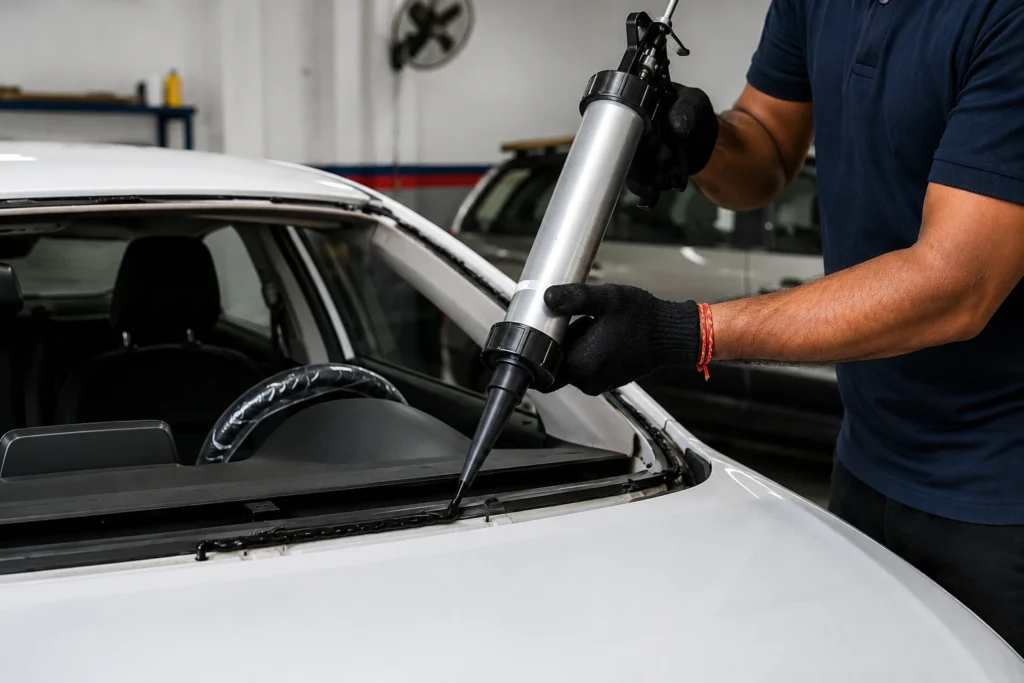
Modern windshields are a structural part of your vehicle, contributing to passenger safety, roof strength, and proper airbag deployment. That means the adhesive holding the windshield in place is just as important as the glass itself.
Why Windshield Adhesives Matter More Than You Think
The adhesive used during car windshield replacement isn't ordinary glue — it's a specially engineered automotive urethane that creates an incredibly strong bond between the vehicle frame and the windshield. A properly bonded windshield helps:
The Science Behind Windshield Adhesives
Polyurethane — the chemistry that keeps your windshield in place
Professional installers use polyurethane-based adhesives because they offer excellent flexibility and strength. These adhesives cure through a chemical reaction with moisture in the air, developing a durable bond capable of handling daily road use.
Unlike ordinary sealants, automotive urethane remains slightly flexible after curing — allowing it to absorb stress without cracking. However, this only works when high-quality adhesives are used and applied correctly.
Why Some Windshield Adhesives Fail Within Six Months
Several factors can shorten the lifespan of windshield adhesives. Here are the most common reasons:
Cheaper products often contain lower-grade raw materials that lose strength much faster when exposed to heat, rain, and constant vibration. Initially everything appears fine, but over time the adhesive begins to break down — leading to:
- Water entering the cabin
- Wind noise at speed
- Loose windshield edges
- Reduced bonding strength
Even premium adhesives cannot perform properly if the installation surface isn't prepared correctly. Before installing a new windshield, technicians must remove all of the following from the vehicle frame:
- Old adhesive residue
- Dust and debris
- Rust and oxidation
- Oil and moisture
Manufacturers specify the exact bead height and width required for each vehicle. Applying too little creates weak spots, while applying too much can prevent proper windshield positioning. Experienced technicians follow vehicle-specific guidelines to ensure uniform bonding throughout the entire frame.
Every adhesive has a recommended Safe Drive Away Time (SDAT). Moving the vehicle too early can disturb the bonding process before the adhesive reaches its required strength. Professional workshops always advise customers about the correct waiting period based on the adhesive used and current weather conditions.
Heat and humidity directly affect how adhesives cure. High temperatures may speed up curing, while colder conditions can slow the process significantly. Rain during installation can also interfere with bonding if proper precautions aren't taken. Professional installers adjust their process based on environmental factors.
Primers help windshield adhesives bond effectively to both the glass and the vehicle body. Skipping primer — or using the wrong one — can weaken adhesion considerably. Although primer isn't visible once the job is complete, it plays a vital role in ensuring a secure, long-lasting installation.
Signs Your Windshield Adhesive May Be Failing
If you notice any of these symptoms, don't ignore them. Delaying repairs can worsen windshield damage and compromise your safety.
Why Professional Installation Makes All the Difference
Professional technicians follow a carefully controlled installation process that leaves no step to chance:
Vehicle inspection — assessing the frame, existing adhesive, and any hidden damage before starting
Proper removal techniques — using precision tools to remove old glass without damaging the frame or paint
Frame cleaning and preparation — removing all residue, rust, dust, and moisture from the bonding surface
Correct primer application — preparing both the glass edge and vehicle frame for maximum adhesion
High-quality windshield adhesives — applying manufacturer-approved automotive urethane at the correct bead height and width
Approved curing procedures — following the correct Safe Drive Away Time based on conditions
Final safety inspection — verifying alignment, sealing, and overall installation quality before handover
Does Insurance Cover Windshield Replacement?
Many vehicle owners are surprised to learn that comprehensive insurance often covers windshield replacement. Depending on your policy, you may be eligible for:
Tips to Make Your New Windshield Last Longer
After replacement, a few simple precautions can help maximize the life of the adhesive:
- 1Follow the recommended safe drive-away time before moving the vehicle
- 2Avoid washing the car immediately after installation
- 3Leave a window slightly open during the first day if advised
- 4Avoid slamming doors for the first few hours after installation
- 5Inspect the windshield periodically for leaks or unusual noises
- 6Always choose a professional service over the cheapest available option
Final Thoughts
The strength of a windshield depends on much more than the quality of the glass. The chemistry behind windshield adhesives plays a critical role in keeping your windshield secure, leak-free, and capable of protecting you during an accident.
When adhesives are applied correctly using professional techniques and high-quality materials, they can provide years of reliable performance. Shortcuts during installation, however, often lead to premature failures, costly repairs, and serious safety risks.