
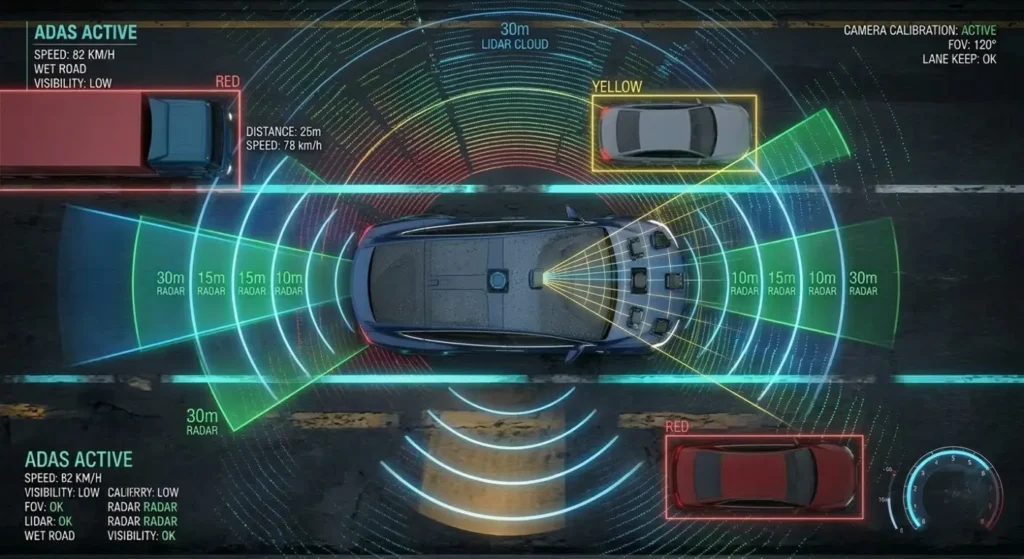
Modern vehicles are smarter than ever. Features like lane-keeping assist, adaptive cruise control and automatic emergency braking rely on Advanced Driver Assistance Systems (ADAS) to help drivers stay safe on the road.
But what many car owners don’t realise is that these safety systems depend heavily on precise camera and sensor alignment, especially after a windshield replacement. That’s where ADAS recalibration or windshield recalibration becomes essential.
However, the accuracy of this calibration doesn’t depend only on the equipment used. Weather conditions and road environments can also influence how accurately ADAS systems are calibrated and how well they perform afterward.
Let’s explore how these factors affect the reliability of your vehicle’s safety technology.
Understanding ADAS and Windshield Recalibration
Weather plays a surprisingly important role in the calibration process and the performance of ADAS systems.
1. Rain and Water on Sensors
Heavy rain or water droplets on the windshield can interfere with the cameras used by ADAS. When the camera lens or windshield surface is partially obstructed, the system may struggle to detect lane markings or obstacles accurately.
Research has even shown that rain can reduce the ability of vehicle safety systems to detect objects properly, which may lead to delayed responses in emergency braking or lane-keeping systems.
For this reason, professional technicians usually perform windshield recalibration in controlled indoor environments whenever possible.
2. Fog and Low Visibility
Fog reduces visibility for both drivers and cameras. ADAS cameras rely on clear visual data to interpret the road. When fog limits the contrast between road markings and the surrounding environment, the system may struggle to recognize lanes or obstacles.
This is why calibration and testing in clear visibility conditions are preferred to ensure accurate sensor alignment.
3. Snow, Ice, and Dirt
Snow or ice buildup on the windshield can block sensors completely. Similarly, dirt or debris on the glass can distort the camera’s view.
When sensors are obstructed, the ADAS system may temporarily stop working or provide incorrect warnings until the sensors are cleaned and recalibrated.
4. Extreme Temperatures
Temperature changes can also affect ADAS accuracy.
In very hot or very cold conditions, vehicle materials expand or contract slightly. This can cause minor shifts in sensor alignment or affect adhesives used during a car windshield replacement, which may influence calibration accuracy.
How Road Conditions Influence ADAS Calibration
Weather isn’t the only factor. The condition of the road itself also plays a major role in how accurately ADAS systems function.
1. Faded or Poor Lane Markings
ADAS cameras depend heavily on lane markings to guide features such as lane-keeping assist and lane departure warnings.
If road markings are faded, worn out, or covered by dirt or water, the system may struggle to recognize them, affecting both calibration and real-world performance.
2. Uneven or Damaged Roads
Driving over potholes, bumps, or poorly maintained roads can slightly shift vehicle components or sensor alignment over time.
Repeated impacts can cause the cameras or radar sensors to move out of their precise position, which may eventually require ADAS recalibration to restore accuracy.
3. Road Slope and Surface Level
During static calibration, technicians often require a flat and level surface. Even a slight incline can affect sensor positioning and lead to inaccurate calibration results.
This is why professional workshops perform calibration in controlled environments with proper equipment.
Skipping recalibration might save time but it can cost you safety.
Your vehicle may:
Fail to detect obstacles accurately
Apply brakes too late
Misread lane markings
Provide false alerts
Most importantly, the very features designed to protect you may not work when you need them most.
That’s why whenever you opt for windshield replacement, always confirm that ADAS windshield recalibration is included.
Contact us on the below link for your car windshield replacement
When Should You Get Windshield Recalibration?
You should consider ADAS recalibration in the following situations:
After windshield replacement
After a front-end collision
After suspension or wheel alignment work
If ADAS warning lights appear on your dashboard
If ADAS features stop functioning properly
Many manufacturers specifically require recalibration afterwindshield replacement to maintain the safety and accuracy of ADAS features.
Final Thoughts
ADAS technology has transformed vehicle safety, but its effectiveness depends on precision. Weather conditions, road quality, and proper calibration all play an important role in ensuring these systems function correctly.
If your vehicle requires a car windshield replacement, don’t overlook the importance of windshield recalibration. A properly calibrated system ensures that features like lane assistance, collision warnings, and adaptive cruise control work exactly as they were designed to, keeping you and your passengers safe on the road.