
How Do Rain-Sensing Wipers Actually Work?
A small rain sensor is generally positioned behind the rear-view mirror, on the inside of the windshield. The sensor uses light to detect changes caused by water droplets on the outside surface of the glass. When moisture is detected, the vehicle's system can automatically:
What the rain sensor controls automatically
The system depends heavily on the condition of the windshield and the sensor area — which is exactly why it can behave unexpectedly during heavy monsoon conditions.
Why Rain-Sensing Wipers Misbehave During Heavy Rain
Heavy rain creates conditions that can make automatic wiper systems behave differently from what the driver expects. Here are the most common reasons:
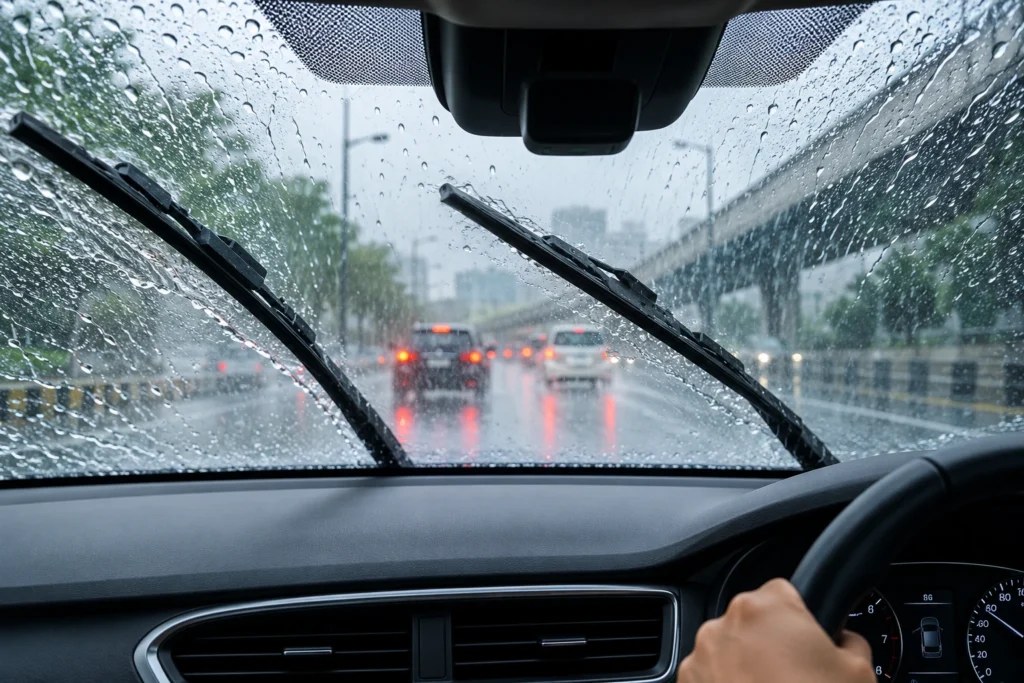
During a very heavy downpour, the windshield may be continuously covered by a large volume of water. The sensor constantly detects moisture, so the wipers operate at high or continuous speed. This can feel like the system is "overreacting" — but in reality, it is responding correctly to the amount of water reaching the glass.
Dust, road grime, oily residue, wax, or other deposits around the sensor area can affect optical sensor readings. This is especially common during monsoon season when roads become muddy and vehicles are exposed to rainwater, dust, and traffic pollution simultaneously.
If your wipers are behaving strangely, properly cleaning the windshield — especially around the rain sensor — is the simplest first step before investigating further.
Sometimes the rain sensor is working perfectly, but the wiper blades are not. Old or damaged blades may leave water streaks, hazy patches, unwiped areas, or thin water films across the windshield. Imagine the sensor correctly tells the wipers to work faster, but the blades cannot clear the water — the result is poor visibility even though the automatic system is technically functioning.
This is one of the lesser-known reasons for erratic rain-sensing wiper behaviour. The rain sensor sits against the windshield through a transparent gel pad that maintains proper optical contact between the sensor and the glass. Over time, the gel pad can deteriorate — affecting the sensor's ability to detect rain accurately.
Common gel pad problems that affect sensor accuracy
If the windshield was replaced and the rain sensor was not correctly repositioned or the gel pad was not replaced, the automatic wiper system may not work as expected with the new glass. A poorly fitted or damaged gel pad can cause erratic sensor behaviour even on a brand-new windshield.
When getting a car windshield replacement on a sensor-equipped vehicle, always ask the installer to inspect the rain sensor and its gel pad as part of the installation process.
A small chip or crack may not immediately appear to be a major problem. But when rain hits the glass, water can collect around damaged areas and create additional glare or distortion — particularly when headlights from other vehicles are reflecting through the wet windshield. Night-time monsoon driving becomes considerably more difficult with even minor glass damage.
Hydrophobic products, waxes, and certain glass treatments change the way water sits on the glass. While some treatments improve visibility during rain, inappropriate products or residue around the sensor area can interfere with sensor readings. If automatic wipers suddenly start behaving differently after a windshield treatment, cleaning the glass and checking the sensor area is the right starting point.
What Heavy Monsoon Rain Does to Your Windshield
Ahmedabad's monsoon conditions can be unpredictable. During intense rainfall, your windshield has to deal with several challenges simultaneously:
What your windshield faces during Ahmedabad's monsoon
Signs Your Rain-Sensing Wipers May Need Attention
You don't have to wait for the system to completely stop working. Watch for these warning signs:
Wipers activate when the windshield is almost dry
The sensor may be detecting something incorrectly, or the windshield and sensor area may need inspection and cleaning.
Wipers don't respond quickly enough to rain
A delayed response can point to a sensor issue, deteriorated gel pad, or a compatibility problem with the windshield.
Wipers run continuously at maximum speed even in light rain
Heavy rain can naturally cause this — but if it happens during light or no rain, the sensor or gel pad should be inspected.
Wipers leave large wet patches or streaks
This usually indicates worn or damaged wiper blades rather than the rain sensor itself — check the blades first.
Wipers make noise or chatter across the glass
Chattering usually points to blade wear, incorrect blade contact, or a dirty windshield surface — not sensor failure.
Problem started after a windshield replacement
Ask the installer to inspect the rain sensor positioning and gel pad — incorrect installation is a common post-replacement cause.
Why Sensor-Equipped Vehicles Need Extra Care During Replacement
Older vehicles mainly required the windshield to fit properly and remain watertight. Modern vehicles can be considerably more complex. Your windshield may interact with:
This means auto windshield replacement isn't simply a matter of removing old glass and fitting new glass. The correct glass specification, sensor positioning, gel pad installation, and installation procedure all matter. For cars equipped with rain-sensing wipers, even a small issue around the sensor contact area can affect automatic wiper operation from day one.
Can Windshield Replacement Be Covered Under Insurance?
In many cases, comprehensive motor insurance policies provide coverage for accidental windshield or auto glass damage, subject to the policy's terms, deductibles, exclusions, and applicable add-ons. Coverage varies between insurers and policies — always check your policy before making a claim. Star Glass House provides cashless insurance claim support for eligible auto glass replacement, depending on the insurer and policy.
How to Prepare Your Car for Monsoon Driving
Don't wait for your wipers to malfunction mid-downpour. Run through these checks before the heavy rains arrive:
Check and Replace Wiper Blades
Replace blades that are cracked, hardened, leaving streaks, or chattering. Good blades are the single most impactful upgrade for monsoon visibility.
Clean Your Windshield Thoroughly
Keep both inside and outside surfaces clean, with special attention around the rain sensor area behind the rearview mirror. Dirty glass can cause false sensor activations.
Inspect for Existing Windshield Damage
Small chips and cracks should be inspected before monsoon — water entering a chip during heavy rain accelerates spreading and creates visibility-reducing glare.
Check the Rain Sensor and Gel Pad
Look for visible bubbles, cloudiness, or separation around the sensor gel pad. If the sensor has been behaving oddly, have it inspected before relying on it during heavy monsoon rain.
Test the Wipers Before It Rains
Run the wipers through all speeds on a dry and wet glass. Don't wait until you're caught in a heavy downpour to discover that something isn't working properly.
Get a Post-Replacement Sensor Check
If your windshield was recently replaced, confirm with the installer that the rain sensor and gel pad were correctly positioned and tested with the new glass.
What Star Glass House Offers in Ahmedabad
When your windshield has sensors or other integrated technology, experience matters. Star Glass House provides comprehensive auto glass services including:
Final Thoughts
Rain-sensing wipers are designed to make driving easier, but they aren't completely independent of the windshield they're working through. Heavy monsoon rain, dirty glass, worn wiper blades, sensor issues, damaged gel pads, and incorrect windshield installation can all contribute to unusual wiper behaviour.
If your automatic wipers suddenly start acting strangely during Ahmedabad's monsoon, don't immediately assume the wiper motor has failed. Start with the basics — inspect the blades, clean the windshield, check for damage, and have the rain sensor inspected if necessary. And if your windshield needs replacing, make sure the process accounts for the vehicle's rain sensor and gel pad. A clear windshield during heavy rain isn't just comfort — it's safety.