
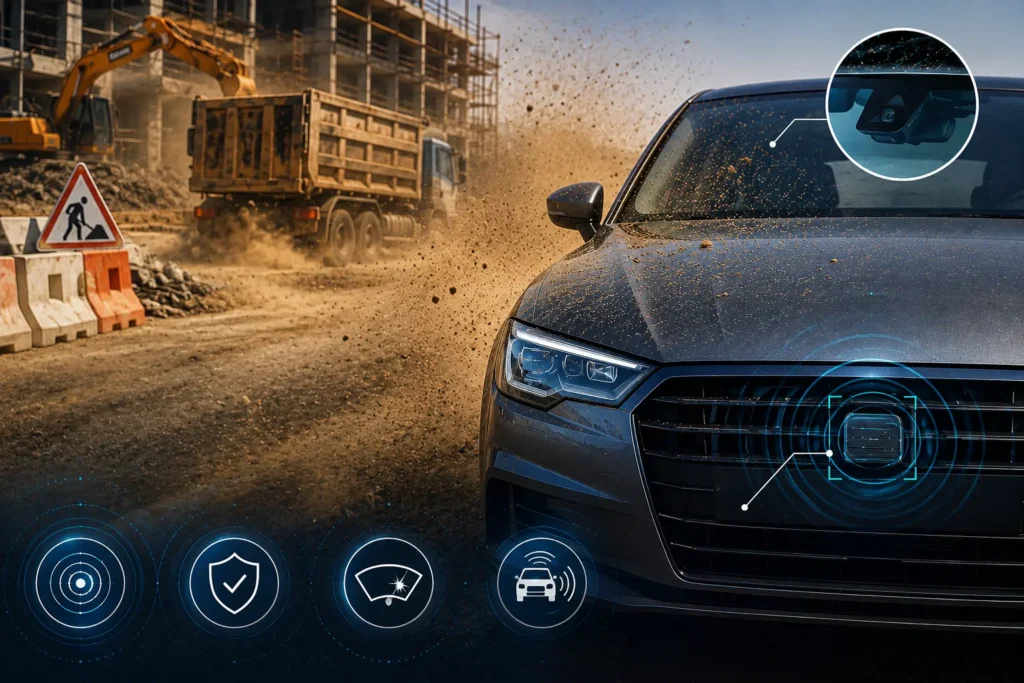
Advanced Driver Assistance Systems (ADAS) have transformed driving by making vehicles safer and smarter. Features like Automatic Emergency Braking (AEB), Adaptive Cruise Control (ACC), Lane Keeping Assist, and Forward Collision Warning all rely on multiple sensors working together with precision.
What Is an ADAS Radar Sensor?
An ADAS sensor is an electronic component that helps your vehicle detect surrounding objects, measure distances, and respond to changing road conditions. The radar sensor specifically emits radio waves that bounce off nearby vehicles, pedestrians, and obstacles. The returning signals help the vehicle determine:
- Distance from other vehicles
- Relative speed of surrounding objects
- Direction of movement
- Potential collision risks
Unlike cameras, radar sensors perform well in low-light conditions and during rain or fog. However, they still require a clear operating environment to maintain maximum accuracy.
How Construction Dust Affects ADAS Radar Performance
Many people assume radar can "see through everything." While radar is more resilient than cameras in challenging weather, excessive dust and debris can still impact its performance in several ways.
Fine construction dust often settles on the front grille, bumper, or emblem where the ADAS radar sensor is mounted. Over time, this layer may reduce signal efficiency, causing delayed or inconsistent object detection.
Modern ADAS systems don't rely on radar alone — they combine data from radar sensors and cameras, many of which are mounted behind the windshield. When dust coats the glass, cameras may struggle to detect:
- Lane markings
- Road signs
- Pedestrians
- Vehicles ahead
Construction sites often have loose stones and gravel that can strike your windshield at high speed. Even a tiny chip or crack becomes a serious issue if your vehicle has a front-facing ADAS camera mounted behind the glass — potentially affecting sensor alignment and camera visibility.
If a stone strikes the bumper or windshield with enough force, it may shift the positioning of sensors or cameras. Even if no visible damage is present, slight misalignment can affect how accurately the ADAS interprets road conditions.
Common Signs Your ADAS May Be Affected
Does a Windshield Replacement Affect ADAS?
Yes — recalibration is essential after every replacement
Many modern vehicles have ADAS cameras mounted directly behind the windshield. Simply installing new glass is not enough. After every windshield replacement, the ADAS system must be recalibrated to manufacturer specifications to ensure cameras and sensors work correctly.
Why Professional Windshield Replacement Matters
Not every windshield replacement service is equipped to handle ADAS-enabled vehicles. A professional technician understands:
- Correct windshield specifications for your vehicle model
- Sensor mounting requirements and clearances
- Camera positioning behind the glass
- ADAS calibration procedures post-installation
- Quality installation standards and adhesive curing times
Can Insurance Cover Windshield Replacement?
Many vehicle owners postpone repairs due to cost concerns. The good news is that depending on your policy, coverage may be available. Many insurers offer:
Always check your policy terms or speak with your insurance provider to understand your coverage before booking a replacement.
Tips to Protect Your ADAS While Driving Through Construction Areas
Maintain a Safe Following Distance
Staying farther behind trucks and construction vehicles reduces the chance of flying stones striking your windshield.
Reduce Speed
Driving at moderate speeds minimizes the impact force of debris and improves your reaction time in tight construction zones.
Clean Your Windshield Regularly
Remove dust, mud, and dirt from your windshield to ensure cameras have a clear, unobstructed view of the road.
Wash the Front Grille and Sensors
Keep the area around your ADAS radar sensor free from excessive dust and debris buildup after driving through work zones.
Repair Chips Immediately
Small chips can spread quickly. Prompt repairs help prevent larger cracks and protect ADAS camera alignment.
Schedule Regular Vehicle Inspections
If you frequently drive through construction sites, periodic inspections help identify hidden damage before it affects safety.
Conclusion
Construction dust may seem harmless, but it can affect much more than your vehicle's appearance. Dust accumulation, flying debris, and windshield impacts can all interfere with your ADAS sensor performance — reducing the accuracy of your radar sensor and front-facing cameras.
If you've noticed windshield damage after driving through construction zones, don't ignore it. Prompt inspection, professional windshield replacement, and proper ADAS calibration are essential for keeping your vehicle's advanced safety features functioning correctly.