
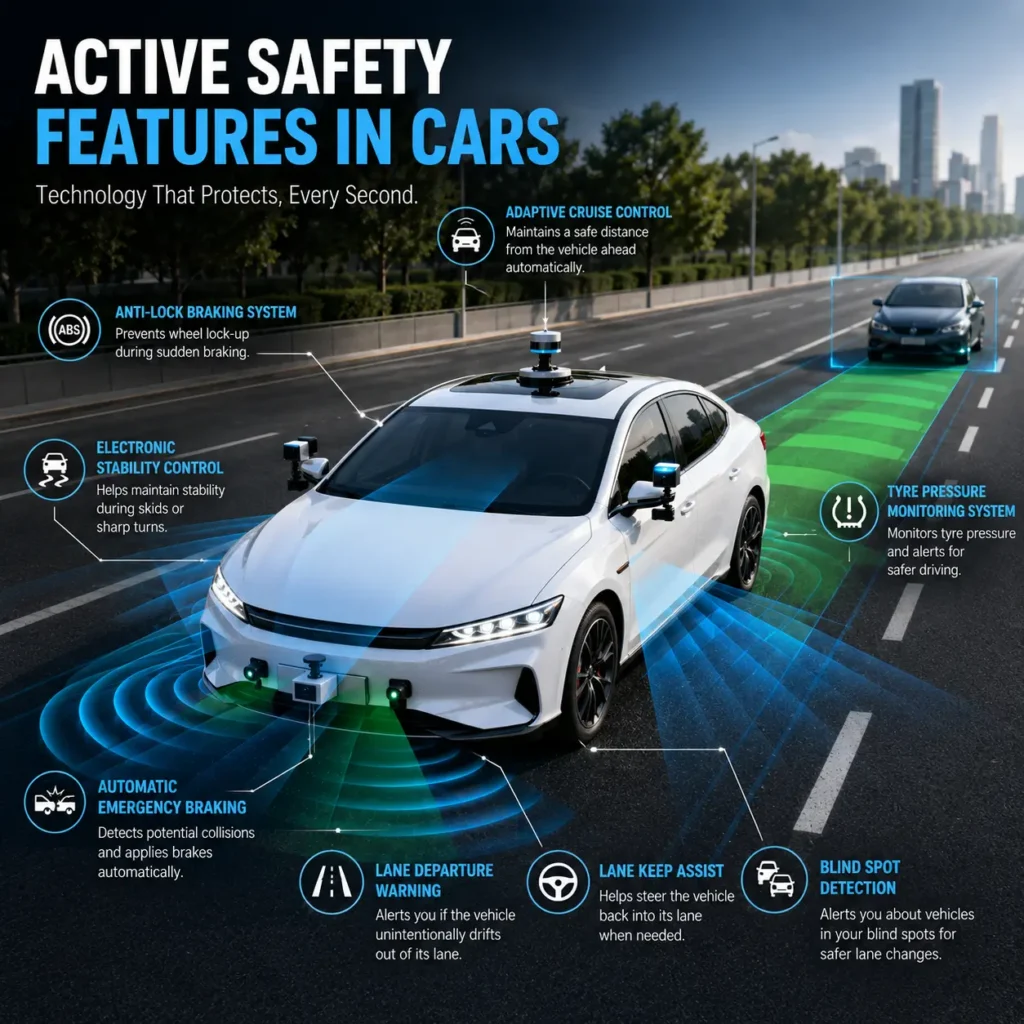
Modern cars are no longer just machines that take you from one place to another. They have evolved into intelligent vehicles equipped with technologies designed to prevent accidents before they happen. These technologies are known as active safety features.
Whether you’re buying a new car, maintaining your current vehicle, or considering a car windshield replacement after damage, understanding active safety systems can help you make informed decisions about your vehicle’s safety.
In this guide, we’ll explain what active safety features are, how they work, and why they are becoming essential for every driver.
What Are Active Safety Features?
Active safety features are systems that continuously monitor the vehicle, road conditions, and driver inputs to help prevent accidents. Unlike passive safety features such as airbags and seat belts that protect occupants after a collision occurs, active safety systems work proactively to reduce the chances of a crash in the first place.
These technologies use sensors, cameras, radars, and advanced software to detect potential dangers and assist the driver in maintaining control of the vehicle.
Contact us on the below link for your car windshield replacement under insurance
Why Are Active Safety Features Important?
Road conditions can change in seconds. A sudden obstacle, slippery road surface, distracted driver, or unexpected vehicle movement can quickly create a dangerous situation.
Active safety features help by:
- Reducing the risk of accidents
- Improving vehicle stability and control
- Assisting drivers during emergencies
- Providing alerts before potential collisions
- Enhancing overall driving confidence
As automotive technology advances, these features are becoming standard in many vehicles across different price segments.
Contact us on the below link for your car glass replacement under insurance
Common Active Safety Features Found in Modern Cars
1. Anti-Lock Braking System (ABS)
ABS is one of the most widely used active safety systems. During sudden braking, vehicle wheels can lock up, causing the driver to lose steering control.
ABS prevents wheel lock-up by rapidly adjusting brake pressure, allowing the driver to maintain control and steer around obstacles while braking. This significantly reduces the chances of skidding, especially on wet or slippery roads.
2. Electronic Stability Control (ESC)
Electronic Stability Control helps keep the vehicle stable during sharp turns, sudden maneuvers, or slippery road conditions.
The system continuously monitors steering inputs and vehicle movement. If it detects that the car is losing traction or beginning to skid, it automatically applies braking to individual wheels and may reduce engine power to help regain control.
3. Traction Control System (TCS)
Traction Control works closely with ESC and prevents wheel spin during acceleration.
When the system detects that a wheel is losing grip, it adjusts engine power or applies braking to restore traction. This is particularly useful during rainy weather, on gravel roads, or while driving uphill.
4. Automatic Emergency Braking (AEB)
AEB is one of the most significant advancements in vehicle safety.
Using sensors and cameras, the system monitors the road ahead. If it detects an imminent collision and the driver fails to react in time, the vehicle automatically applies the brakes to avoid or reduce the impact of a crash.
5. Lane Departure Warning (LDW)
Many accidents occur when drivers unintentionally drift out of their lane due to distraction or fatigue.
Lane Departure Warning uses cameras to monitor lane markings and alerts the driver when the vehicle begins moving out of its lane without indicating.
6. Lane Keep Assist (LKA)
Taking lane safety one step further, Lane Keep Assist can actively steer the vehicle back into its lane if the driver doesn’t respond to lane departure warnings.
This feature is becoming increasingly common in vehicles equipped with Advanced Driver Assistance Systems (ADAS).
7. Blind Spot Detection
Every vehicle has blind spots where nearby vehicles may not be visible through mirrors.
Blind Spot Detection uses sensors to monitor these areas and alerts the driver when another vehicle is present, making lane changes safer and reducing side-collision risks.
8. Adaptive Cruise Control (ACC)
Adaptive Cruise Control automatically maintains a safe distance from the vehicle ahead.
Unlike traditional cruise control, it can accelerate, slow down, or even stop the vehicle depending on traffic conditions, reducing driver fatigue during long journeys.
9. Tyre Pressure Monitoring System (TPMS)
Incorrect tyre pressure can affect braking performance, fuel efficiency, and vehicle handling.
TPMS continuously monitors tyre pressure and alerts the driver if it falls below or rises above recommended levels, helping prevent tyre-related accidents.
The Role of ADAS in Active Safety
Many modern active safety features are part of a broader technology package known as Advanced Driver Assistance Systems (ADAS).
ADAS combines cameras, sensors, radar systems, and intelligent software to support drivers in real-time. Features such as Automatic Emergency Braking, Lane Keep Assist, Adaptive Cruise Control, and Blind Spot Monitoring are all examples of ADAS technologies.
As vehicles become smarter, ADAS is playing a major role in reducing road accidents and improving overall driving safety.
Why Your Windshield Is Important for Active Safety Systems
Many drivers don’t realize that their windshield plays a critical role in the functioning of modern safety systems.
ADAS cameras and sensors are often mounted behind the car windshield. These cameras help monitor lane markings, traffic conditions, pedestrians, and nearby vehicles.
If the windshield is cracked, improperly installed, or damaged, these systems may not function accurately.
This is why professional windshield replacement is essential whenever significant windshield damage occurs. A properly installed windshield ensures that safety cameras remain correctly aligned and calibrated.
For vehicles equipped with ADAS, a car windshield replacement often requires sensor recalibration to restore the accuracy of safety features.
Below is the YouTube link showcasing the process of Rain Sensor Gelpad Installation on Audi
Can Insurance Cover Windshield Replacement?
Many vehicle owners are surprised to learn that a damaged windshield may be covered under their motor insurance policy.
Depending on your insurer and policy coverage, windshield replacement under insurance can significantly reduce out-of-pocket expenses.
Comprehensive insurance plans often include coverage for glass damage, making auto windshield replacement more affordable when unexpected damage occurs.
Before proceeding with repairs, it is always advisable to check your policy terms and understand the claim process.
Contact us on the below link for your auto windshield replacement under insurance
Active Safety vs Passive Safety Features
Active Safety Features
Prevent accidents before they occur
ABS
ESC
AEB
Lane Keep Assist
Blind Spot Detection
Passive Safety Features
Protect occupants during a collision
Airbags
Seat Belts
Crumple Zones
Side Impact Protection
Reinforced Vehicle Structure
Both types of safety systems are important and work together to create a safer driving experience.
Final Thoughts
Active safety features have transformed modern driving by helping drivers avoid accidents rather than simply minimizing their impact. Technologies such as ABS, ESC, Automatic Emergency Braking, Lane Keep Assist, and Blind Spot Detection are making roads safer every year.
At the same time, maintaining your vehicle’s safety components is equally important. Since many modern safety systems rely on cameras mounted behind the car windshield, timely windshield repair or car windshield replacement becomes critical for ensuring these technologies function correctly.
Whether you’re upgrading your vehicle, learning about ADAS, or considering auto windshield replacement, understanding active safety features is a valuable step toward safer and smarter driving.
Contact us on the below link for your car glass replacement under insurance