
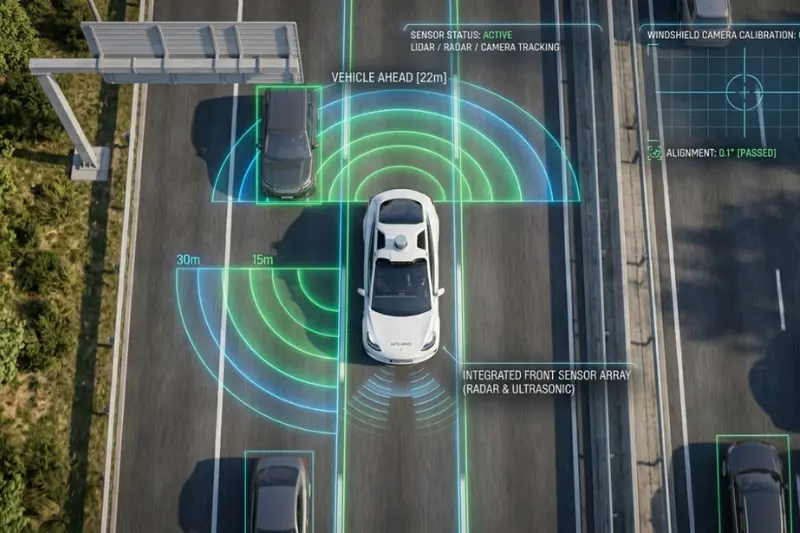
If you drive a modern car, chances are it’s smarter than you think.
Features like lane assist, automatic emergency braking, adaptive cruise control, and collision warnings are all part of the technology called ADAS – Advanced Driver Assistance Systems. These features quietly work in the background to make your driving safer every single day.
But here’s something many car owners don’t realise: if you go for a windshield replacement, your ADAS system may need recalibration. And yes, it’s more important than it sounds.
Let’s break it down in simple terms.
Why ADAS Recalibration Is Needed After Windshield Replacement
In most modern vehicles, the front camera that controls ADAS features is mounted right behind the windshield.
So when you go for a car windshield replacement, that camera gets disturbed even if it’s by a few millimetres.
Now you might think, “It’s just a tiny shift. Does it really matter?” Actually, it does.
Even a slight misalignment can cause:
Lane assist to pull incorrectly
Emergency braking to react late
Cruise control to misjudge distance
Warning alerts to trigger at the wrong time
That’s why ADAS windshield recalibration is not optional, it’s essential.
How ADAS Windshield Recalibration Works (Step-by-Step)
Here’s what really happens behind the scenes after your windshield replacement.
Step 1: System Check and Scan
This scan checks:
If recalibration is required
Whether there are any sensor errors
The manufacturer’s exact calibration procedure
Every car model is different. Some require static calibration, some dynamic, and some need both.
Step 2: Static Calibration (Done in the Workshop)
In static calibration, your vehicle stays stationary inside the workshop.
Technicians place special calibration targets in front of your car at precise distances and angles. These targets help the camera “re-learn” its alignment.
The process may look simple, but it requires:
Perfect lighting
Exact measurements
Manufacturer-specific equipment
Even small mistakes here can affect how your car reads the road.
Step 3: Dynamic Calibration (Done on the Road)
Some vehicles require dynamic calibration.
This means the technician drives your car at a steady speed on clearly marked roads. During this drive, the system automatically adjusts itself by reading lane markings and surroundings.
Think of it like teaching your car to see properly again.
This step usually takes 20–45 minutes depending on the vehicle.
tep 4: Final Verification
After calibration, the system is scanned again to ensure:
No warning lights remain
All ADAS features are functioning correctly
The system meets manufacturer safety standards
Only after this is your vehicle considered fully safe to drive.
What Happens If You Skip ADAS Windshield Recalibration?
Skipping recalibration might save time but it can cost you safety.
Your vehicle may:
Fail to detect obstacles accurately
Apply brakes too late
Misread lane markings
Provide false alerts
Most importantly, the very features designed to protect you may not work when you need them most.
That’s why whenever you opt for windshield replacement, always confirm that ADAS windshield recalibration is included.
Contact us on the below link for your car windshield replacement
Quick Tips for Car Owners
✅ Always ask your auto glass expert if ADAS recalibration is included with your car windshield replacement.
✅ If your car has forward-facing cameras, insist on professional calibration, it’s often required to restore safety systems to factory precision.
✅ Understand the two main calibration types (static and dynamic) so you know what to expect.
Final Thoughts
Today’s cars are smarter than ever. But all that smart technology depends on one simple thing — accuracy.
A windshield replacement is no longer just about fixing cracked glass. In vehicles equipped with ADAS, it’s about making sure the safety systems behind that glass are perfectly aligned and working exactly the way the manufacturer intended.
If you’re getting a car windshield replacement, don’t hesitate to ask whether ADAS windshield recalibration is part of the process. It’s a small step that makes a big difference in how your car protects you and your family.
At Star Glass House, we understand that replacing a windshield isn’t just a repair — it’s about restoring your vehicle’s safety. Our team ensures that every auto windshield replacement is handled with precision, and when required, ADAS windshield recalibration is carried out using proper equipment and manufacturer-recommended procedures.
Because when you drive away, you shouldn’t just have a new windshield — you should have complete peace of mind.